What did OpenAI actually launch?
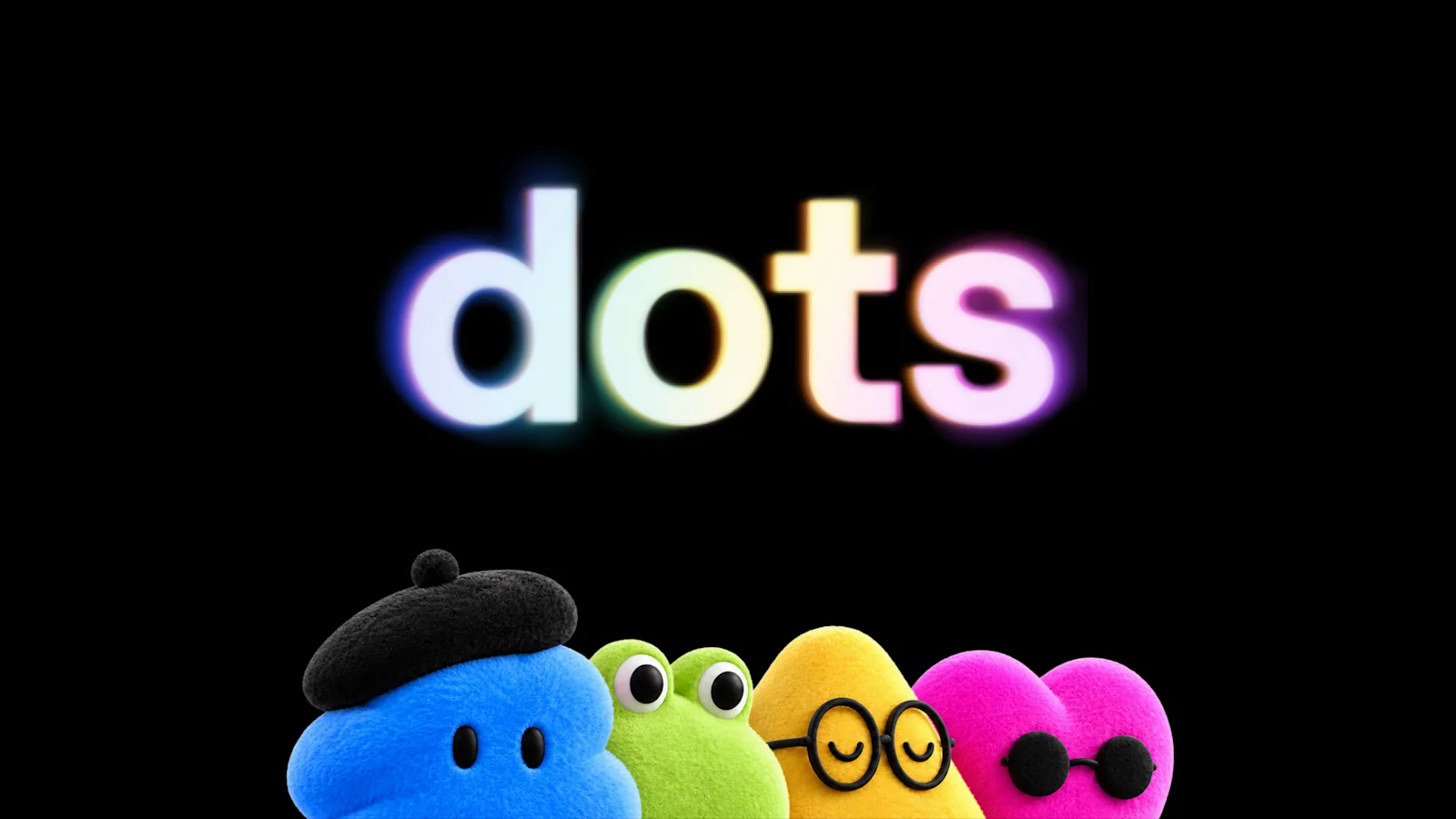
Dots, lowercase, announced at OpenAI's DevDay on September 29, 2026. A dot is an agent that stays on. It works in the background on its own cloud computer and browser, keeps context across the places you talk to it, and messages you when it has an update or needs a decision.
What OpenAI confirmed, as of launch day:
Where you reach it. The ChatGPT desktop, web and mobile apps, Slack and Microsoft Teams. You can also hop on a voice call with your dot to talk something through. Texting is listed as coming soon.
What it can touch. Over 4,000 apps through ChatGPT's plugins, with permissions managed in the same app controls ChatGPT already uses. When it is idle it does what OpenAI calls proactive research, using read-only tools that cannot send messages or change anything.
What keeps it in check. Custom Rules let you allow a specific action, require your approval, or block it outright. An auto-review step checks anything that affects your accounts or shares information. Some tasks, like changing a password, always stay with you.
Who gets it. Pro and Business Premium subscribers in eligible markets, with the first dot included at no extra cost. Enterprise, Edu and Healthcare workspaces can turn on a beta if an admin enables it. Adding more dots is coming, and OpenAI has not published a price for it yet.

Does a dot get its own phone number?
Not according to OpenAI. In the hours before the keynote, strings found in the ChatGPT app suggested each agent would get its own phone number and email address, and a lot of coverage, including an earlier version of this post, repeated that. The announcement does not mention either.
The voice calls OpenAI describes are between you and your dot. Nothing in the launch says a dot will phone a business for you or take calls from the public. That could change, since these products are moving weekly, but as of today it is not a feature.
How is dots different from Muse?
Muse is a personal agent that acts for customers, including phoning businesses on their behalf. Dots is a work agent inside a paid ChatGPT plan, aimed at proposals, research and follow-ups. Both are built on the same idea: the agent prepares the work and you approve it.
Muse is a personal agent. It launched September 8 with a free tier and $20 and $100 plans. On September 17 it started placing phone calls to US businesses for its users, and on September 29 Meta added Muse for Small Business, with connectors for QuickBooks, HighLevel, Shopify, Stripe and a dozen more.
Dots is a work agent. It lives inside a paid ChatGPT plan, and OpenAI's own examples are proposals, launch materials, research and code. The pitch is a colleague that keeps working while you are off doing something else.

| Muse (Meta) | dots (OpenAI) | |
|---|---|---|
| Built for | Personal errands, plus small business back office | Work: proposals, research, follow-ups, code |
| Price | Free, $20 or $100 a month | First dot included with ChatGPT Pro or Business Premium |
| Calls businesses for you | Yes, US businesses, since Sep 17 | Not announced |
| Its own email address | Announced Sep 23, no date yet | Not announced |
| Connected apps | 15 business apps plus Meta apps, custom connectors | 4,000+ through ChatGPT plugins |
| Approval controls | Nothing publishes, sends or spends without approval | Custom Rules: allow, require approval, or block |
| Where you talk to it | Muse app, web and WhatsApp | ChatGPT apps, Slack, Teams, voice calls, texting soon |
What changes for a contractor?
Two things, moving at different speeds. On the customer side, Muse can already phone you for a homeowner, and it moves on if nobody answers. On the office side, dots can take follow-ups and proposal updates off your plate, if you already pay for ChatGPT Pro or Business Premium.
The customer side is already here, and it is Muse. A homeowner can now tell an agent to find three gutter companies and get quotes, and the agent will dial. When a person gets voicemail twice they often give up for the day, and you get another shot tomorrow. An agent working a list does not. An unanswered ring is a row it skips, and it has moved to the next name before you notice the missed call.
The office side is where dots fits. Following up on open estimates, keeping a proposal current when the scope changes, pulling last month's numbers together. If you already pay for ChatGPT Pro or Business Premium, it is worth an afternoon to see what it does with your inbox and your quoting. If you do not, nothing about this launch makes it urgent, because it does not touch your phone.

What should you actually do this month?
Make sure something always answers, put real prices in plain text, keep your quote form usable by software, and reply with something actionable. None of it depends on which agent wins.
Make sure something answers, always. A person, a service, or an AI receptionist. That was true before any of this, and agents that call from a list raise the cost of getting it wrong.
Put real numbers in plain text on your site. Price ranges, service area, what you do and do not take on, how fast you can get there. An agent comparing you to two competitors can only compare what it can read. A PDF price sheet or a number baked into a graphic is invisible to it.
Do not make your quote form hostile to software. Multi-step wizards that need JavaScript to reveal the next field, and bot challenges on first contact, both block agents. They also annoy a human on bad cell service in a truck, so there is no tradeoff to weigh.
Reply with something actionable. A range, a window, a link. "We will be in touch" is a dead end for an agent and, honestly, for a person too.
None of that requires an opinion about OpenAI or Meta. It is what being reachable looks like now.
Correction, September 29, 2026: an earlier version of this post, written before the DevDay keynote, reported that each dot would have its own phone number and email address. OpenAI's announcement does not include either, and the post has been rewritten to match what launched.