The short-term rental problem
Most short-term rentals don't have a website. They have an Airbnb listing, maybe a Vrbo listing, and a Calendly. The owner pays platform fees of 14% to 20% per booking, gets ranked against thousands of other rentals on a generic algorithm, and competes on price and review count alone.
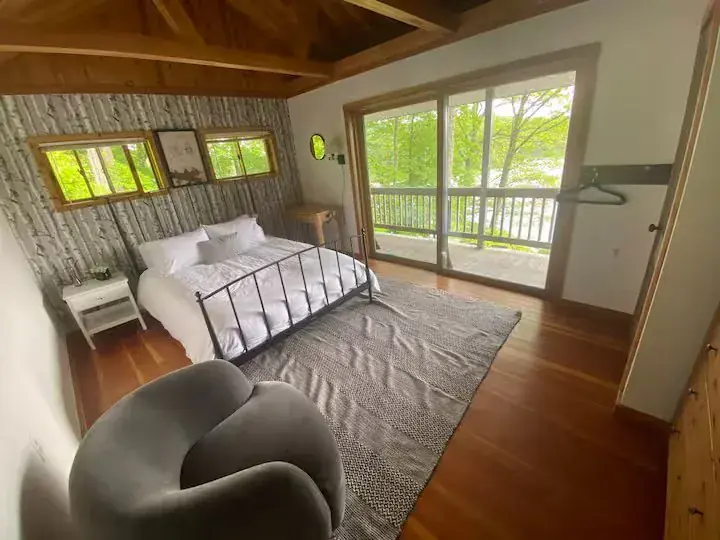
The problem isn't that Airbnb doesn't work. It works fine for casual rentals. The problem is that the listing format flattens everything. A unique lakefront cabin three hours from Manhattan ends up looking, on the screen, exactly like a basement apartment three hours from Manhattan. Same five-photo carousel. Same star rating. Same "Superhost" badge. The category cannot signal specialness because the format won't let it.
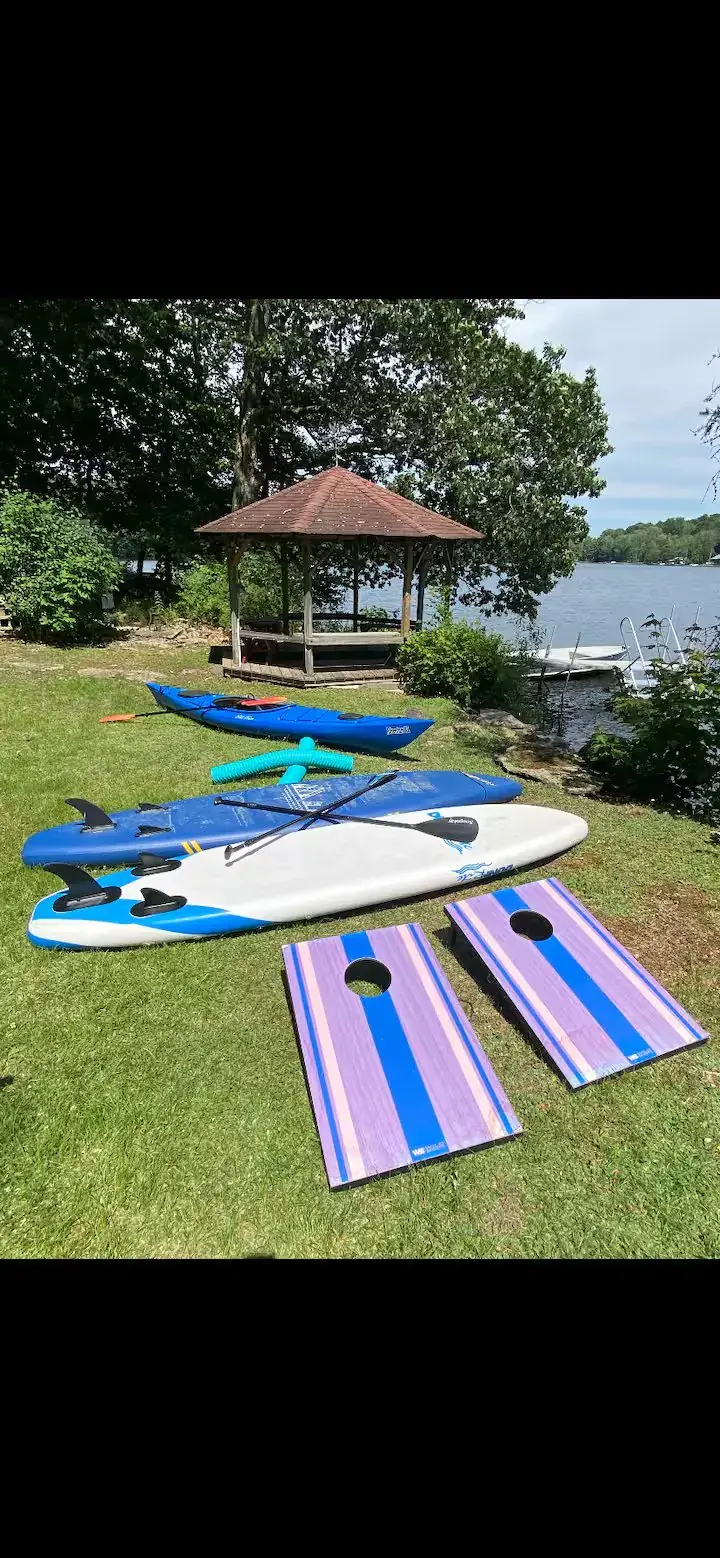
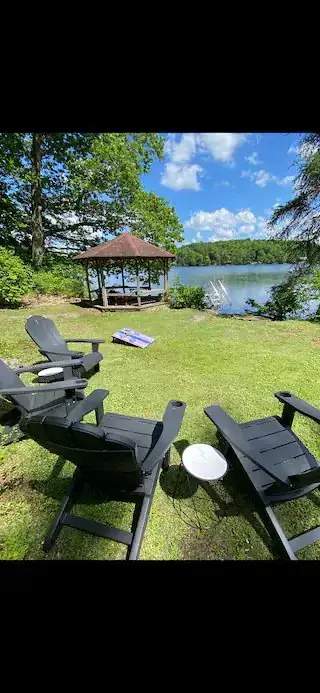
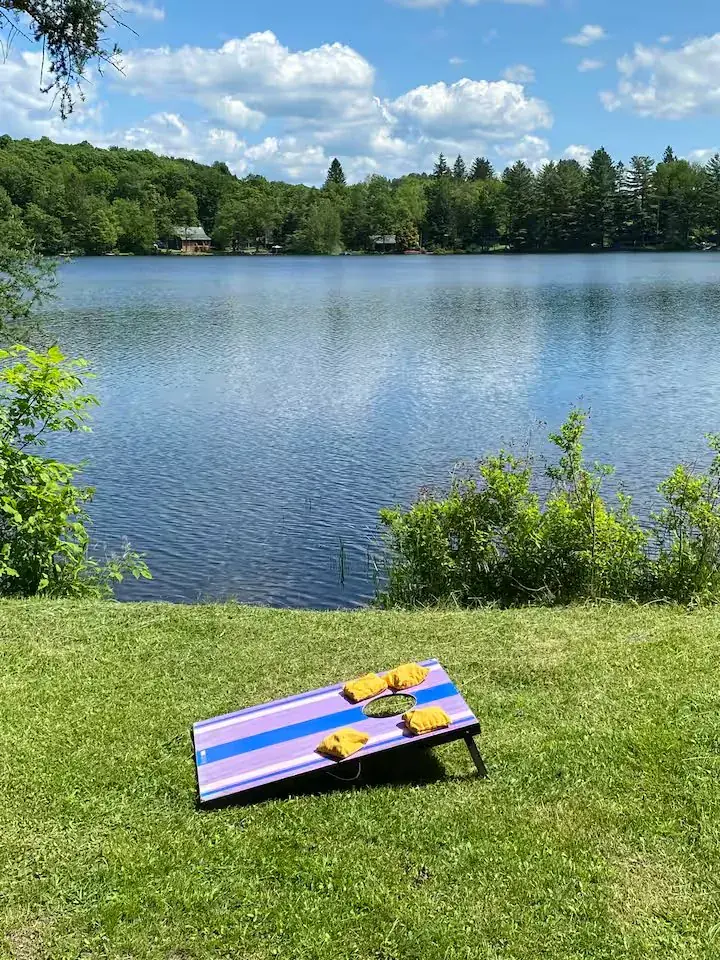
For Shehawken: a private-dock cabin on a quiet lake with kayaks, paddleboards, a row boat, and easy access to skiing, fly-fishing, and a Catskills foliage drive. That flattening was a real cost. The cabin has the makings of a destination, not a commodity stay.
What Shehawken actually is
It's not just a cabin. It's a position, geographic and seasonal. Three hours from two of the largest metro areas on the East Coast. Fifteen minutes from Hancock, NY, where the Delaware River trout fishing is regionally famous. Thirty minutes from Elk Mountain, which has the longest ski runs in the Poconos. Year-round it's a lakefront retreat. Different season, different reason to come.
An Airbnb listing can mention these things. It can't position them. The listing format has no room for a foliage essay or a fly-fishing town guide. It has room for a hero photo, a paragraph, and amenities checkboxes.
So Atlas built the website that does have room.
What Atlas built
Atlas built six pages plus a dedicated town page for Starrucca, PA. The structure was deliberately closer to a regional travel guide than to a rental listing.
The homepage as story
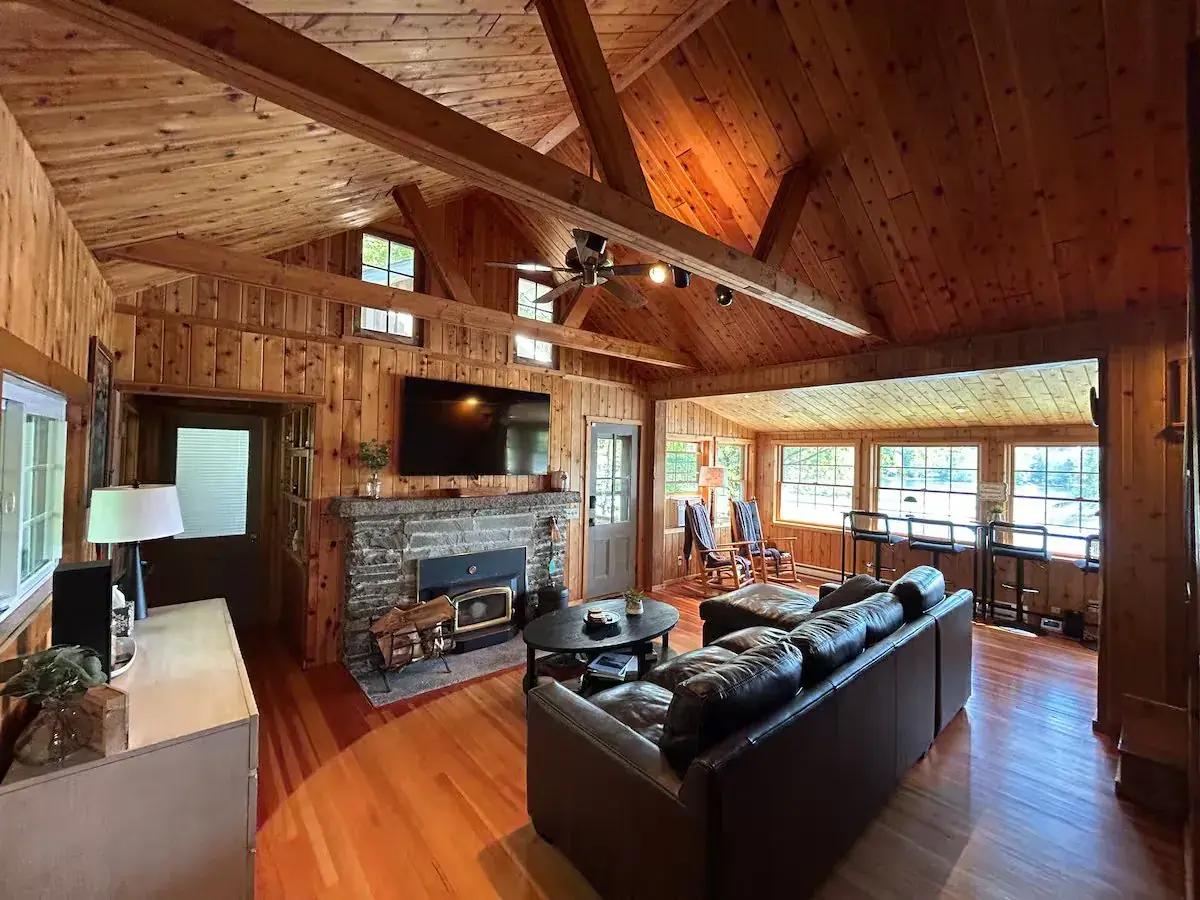
The homepage doesn't lead with amenities or pricing. It leads with the position, "a quiet lake, a warm cabin." The cabin's distinguishing features (private dock, paddle boards, row boat, the great room) come next, and only then comes booking information. The order matters: destination first, transaction second. By the time a visitor reaches the booking form, they're already imagining the trip.
A town page for Starrucca, PA
This is the kind of page Airbnb doesn't index. A real, indexable, schema-marked page about Starrucca, PA: the town the cabin is in, what's around it, how to get there, what to do once you arrive. Visitors searching "Starrucca PA things to do" or "Wayne County PA cabin rentals" land on this page. Airbnb can't compete for those queries because Airbnb doesn't have town pages.
Three travel essays
Real blog posts written for the actual travel-research keywords this cabin can win:
Each post is a real piece of writing, not a content-marketing exercise. Each one earns search traffic from people who didn't know Shehawken existed but are about to plan a trip in the region.
The site as the trust layer between the reel and the booking
The site doesn't compete with the Airbnb listing. It works in front of it. Someone scrolls past a Studio reel on Instagram, sees something they like, Googles "Brothers Den Shehawken" or "Shehawken Lake cabin," and lands on shehawkencabin.com. The site does what the Airbnb listing format physically can't: 4-season storytelling, drive-time math from NYC and Philly, real travel writing, a 22-review proof block. By the time the visitor clicks Book on Airbnb, the decision is already made. Genesis sites are built to be the front door to the listing, not a replacement for it.
Why this works for any unique stay
Shehawken's strategy generalizes to any short-term rental that has more story than a listing format can hold. A historic farmhouse. A glass cabin in the redwoods. A converted lighthouse. A surf bungalow with a specific break out front. Anything where the geographic position, the property's character, or the seasonal use cases are the actual product, not the bed count.
For these properties, the website is doing work the listing platforms cannot. It's building search-engine authority for the destination, not just the listing. It's catching Google traffic for "cabin near Hancock NY" and Instagram traffic from reels, and converting it into Airbnb bookings the listing alone wouldn't have caught. It's selling the trip, not the room.
The numbers that matter
17 nights / 6 stays in 10 days. 75+ Google and Instagram visitors to the new site over the same window. Two Studio reels, one Genesis-built site, and an Airbnb listing that's now ranked higher because more direct-traffic visitors are clicking through and booking.
The Airbnb algorithm rewards listings that get external traffic and convert it. The site + reels combo doesn't just feed the listing. It teaches the platform that the listing deserves better placement. That's the compounding loop.