Close rates on inbound phone calls for home services run between 40% and 60% industry-wide. Someone calling means they already have a problem, already did some searching, and already picked up the phone. That’s the highest-intent lead type there is.
So when that call goes unanswered: voicemail, dead line, someone fumbling the phone on a roof, the average lost value isn’t the full job value. It’s the job value multiplied by the close rate.
Not sure where your current site stands? Run it through our free AI-era SEO audit. You get a scored report of what is holding it back, emailed in minutes. No sales call attached.
Run the free audit →For a typical HVAC business: $400 × 50% = $200 in lost revenue per missed call. For a plumber: $350 × 50% = $175. For a roofer: $8,500 × 45% = $3,825. And that’s per missed call.
The average small service business gets 30–80 inbound calls per month. If 62% of them go unanswered, the Invoca number. That’s 20 to 50 missed calls per month at the low end.
For a roofer with lower call volume but higher ticket, the number is worse: 20 calls per month × 62% missed = 12.4 missed calls. 12.4 × $3,825 average value = $47,430 per month. Annual impact: over $500,000.
Those aren’t speculative numbers. They’re the direct cost of not answering the phone.
Most contractors don’t see this in their books because it’s an opportunity cost, money that never hit the P&L in the first place. But it’s real. And once you see it, you can’t unsee it.
Presets are example averages. Swap in your own numbers. Lost value per call is your average job times your close rate on calls you answer.
Your numbers stay in your browser. Home service calls typically close at 40 to 60 percent. Orion answers every call, from $50 a month.
Why contractors miss calls even when they’re trying not to
It’s rarely laziness. The job itself makes it unavoidable.
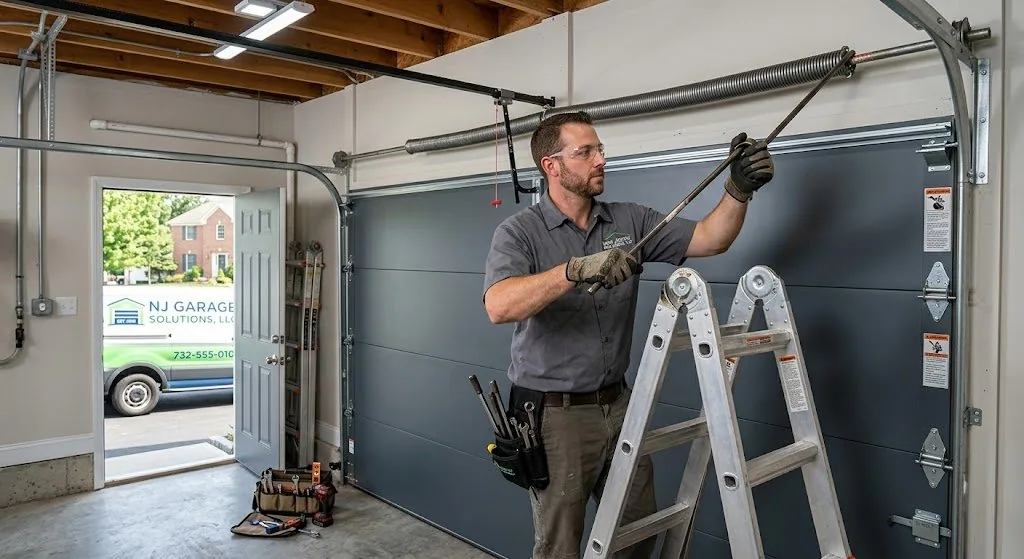
You’re on a roof. You physically can’t hear the phone. Or you can, and taking the call means getting down, losing footing, risking a fall.
You’re already on a call. Second call comes in and rolls straight to voicemail. In home services, the second call is often the emergency, the one with the highest lead value, because the first one could wait.
It’s after hours. Plumbing emergencies happen at 11pm. Heat goes out on Saturday morning. The contractor who picks up Saturday at 7am wins the job the contractor who opens Monday at 8am never even knew about.
Weekends and holidays. Nobody wants to work Memorial Day. But a burst pipe on Memorial Day is a $1,200 emergency plumbing job that goes to whoever actually answers.
Your spouse answered. They don’t know pricing. They can’t book. They write down a name and number and put it on the fridge. Caller either waits (maybe) or calls the next contractor on the list (usually).
Every one of these is a structural problem, not a personal failure. You can’t clone yourself. You can’t answer while you’re on a ladder. You can’t be at the shop at 9pm on a Wednesday.
So the question isn’t “how do I stop missing calls.” It’s what picks up when I can’t.
The three traditional solutions, and why each one fails
Contractors have been solving this for decades. The solutions haven’t kept up.
Solution 1: Voicemail
Cost: free. Effectiveness: nearly zero.
That matches every anecdotal data point from every contractor we’ve talked to. Voicemail isn’t a safety net. It’s a black hole where leads go to die.
And when someone does leave a message, you get a stripped-down version of what they actually needed: “Hey, I’m calling about… uh… a thing with my AC. Call me back.” Then you call back two hours later, they’ve moved on to the next name on their list, and you’ve lost the job anyway.
Voicemail is the default. It’s also the most expensive “free” thing in your business.
Solution 2: Traditional answering service
Cost: $200–$500 per month. Effectiveness: marginal.
Traditional answering services employ actual humans, usually in a call center, answering calls for dozens of different businesses. They sound professional in a generic way, the way a receptionist at a doctor’s office sounds professional.
The problems:
- They don’t know your pricing
- They can’t book your specific calendar
- They read from a script, which customers pick up on instantly
- They’re answering the phone for 40 other businesses the same hour, so they sound distracted
- They can’t qualify a lead: they take a name and number, same as voicemail, just with a person attached
Some newer answering services are better than this. Most aren’t. You’re paying $300 a month for a slightly less depressing voicemail.
Solution 3: Hire a receptionist
Cost: $35,000+ per year, plus benefits, payroll taxes, management overhead. Effectiveness: high, when they’re on the clock.
A real receptionist who knows your business, your pricing, and your schedule is the gold standard. They qualify leads, book calendar slots, handle customer service, and sound like a professional because they are one.
The problems:
- You’re paying $40K+ all-in for a role that actively works maybe 8 hours per day, 5 days per week
- They’re not answering the 9pm emergency call
- They’re not working Christmas Eve
- They get sick, take vacation, quit, train-up, constant churn
- For a 3–5 person contracting business, it’s not a realistic line item
A receptionist solves the call problem during business hours and creates seven new problems outside them.
What an AI receptionist does differently
This is where the math flips.
An AI phone agent answers every call: 7am, 3am, Christmas morning, while you’re on a roof, while you’re on another call. It sounds like a person. Not a chatbot, not a robo-dialer: an actual conversational voice trained specifically on your business, your pricing, your services, and your calendar.
What a modern AI receptionist does on each call:
- Answers by your business name, professionally
- Greets the caller, asks why they’re calling
- Qualifies the lead: urgency, service type, location, budget range
- Can book straight into your Google Calendar, if you want that
- Sends the caller a text confirmation immediately after hanging up
- Sends you a summary email or SMS with the caller’s info, lead score, and booking
- Flags hot leads so you know which callbacks to prioritize
All of that: every call, every time, for less than the cost of one lost job per year.
Pricing for Atlas’s Orion starts at $50 per month for the Starter tier, with 100 minutes included and $0.30 per minute over that. Pro tier is $199 per month with 500 minutes and $0.25 per minute over.
Compare that to the numbers from earlier:
The ROI isn’t close. It’s not even in the same order of magnitude.

The catch, such as it is
AI phone agents aren’t magic. They work best when they’re set up carefully and tuned to the specific business. Two things that matter:
Training data. The agent needs to know your pricing, your service area, your brand voice, and the questions your customers actually ask. Generic AI phone agents that aren’t tuned to your business sound like they’re reading a script, which defeats the whole point.
Calendar integration. Without calendar hookup, the agent can qualify leads but can’t close them. The magic is the booking on the call, in real time, while the customer’s intent is at peak. Any AI agent that just takes messages is a fancy voicemail.
Atlas built Orion specifically around these two requirements. You talk to it once, a 60-second setup conversation, and it knows your business. It connects to Google Calendar in a click. Every call after that is a qualified, booked, triaged lead in your inbox.
You can hear a real demo call on the Orion product page, or see the pricing breakdown for both Starter and Pro tiers.
What this looks like in practice
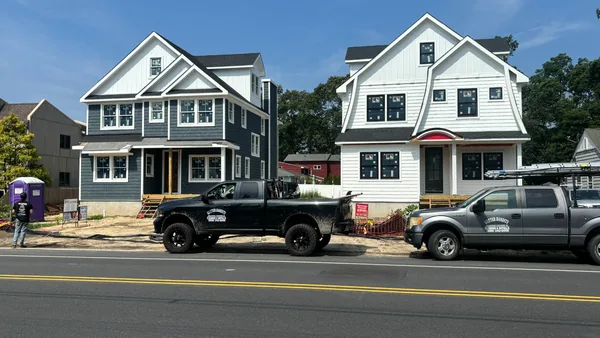
One of our customers is Gutter Bandits, a gutter cleaning business in Central New Jersey. Before Atlas, they were a two-person operation losing weekend and after-hours calls to voicemail. Their old GoDaddy site wasn’t helping, so calls were already limited, and half the ones that came in went to a dead voicemail box.
After setup with Genesis (their website) and Orion (their phone agent), the numbers changed materially. The full breakdown is in our Gutter Bandits case study: including before/after rankings, traffic data, and a quote from Tristan about what actually changed.
The short version: the call that would have hit voicemail on a Saturday morning now books a Tuesday estimate appointment. The money that was leaving the business silently now lands in the P&L.
The math most contractors haven’t done
Here’s the uncomfortable summary.
If you’re a home service contractor getting 30–80 calls per month, and 62% of them are going unanswered, you’re leaving somewhere between $25,000 and $225,000 per year on the table.
For $50–$200 per month, an AI phone agent closes that gap entirely. The hardest part of the decision is believing the math the first time.
Try it. Hear it handle a real call with your business’s info. The demo is free and takes 60 seconds to set up.