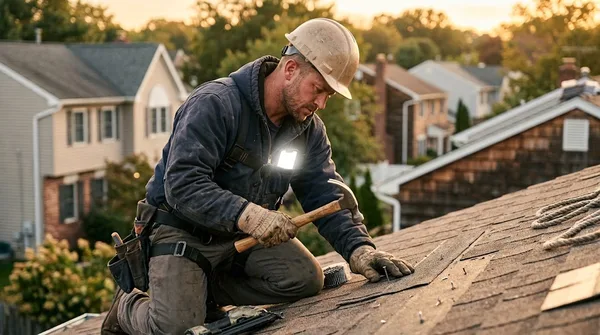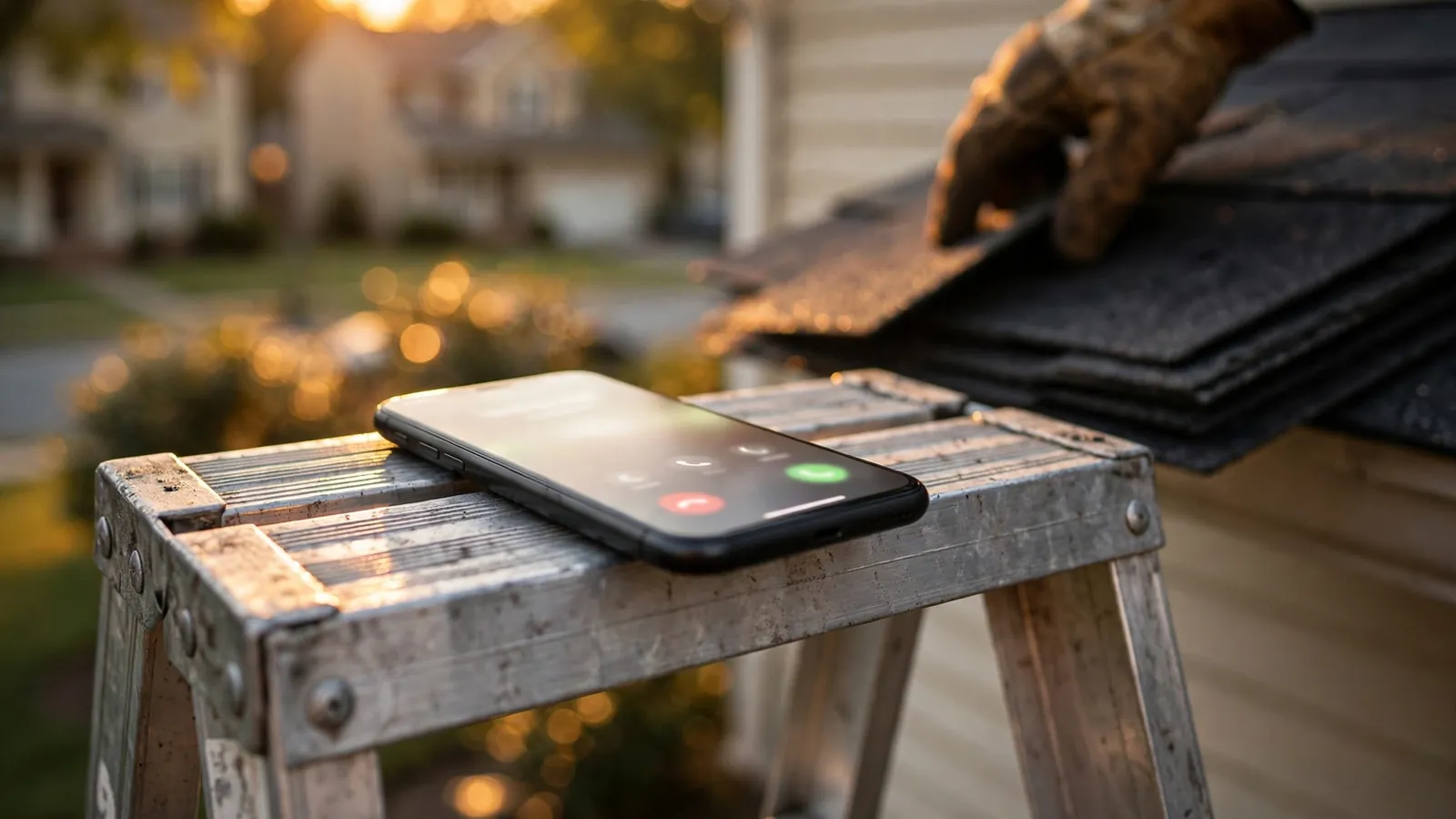
I keep coming back to the same question when I talk to contractors and shop owners: why not? Your phone rings while you're on a roof, under a car, or at dinner. You can't pick up. Right now that call goes to voicemail or rings out. For the price of a couple of lunches a month, something could answer it, get the caller's name, number and what they need, and email you a summary. I genuinely don't see the downside for most businesses, so this post is me trying to argue the other side and see what holds up.
What does an AI receptionist for missed calls actually cost?
Usually $50 to $100 a month for a small business plan. Our own, Orion, is $50 a month with 100 minutes included and $0.30 a minute after that, month to month. Over a year that's $600. So the question is simple: will answering the calls you're missing now bring in at least $600 of work a year? For a plumber, a roofer, a detailer or an auto shop, that's often one job.
| If your average job is | Jobs a year to break even |
|---|---|
| $300 | 2 |
| $600 | 1 |
| $1,500 | Less than 1 (one job covers about 2.5 years) |
| $10,000 | Less than 1 (one job covers about 16 years) |
That's just the math on the job itself. It doesn't count repeat work, referrals or reviews from a customer who would otherwise have called someone else.
Aren't missed calls rare?
Not really. Invoca, a call tracking company, looked at over 60 million calls for its 2025 benchmarks report and found answer rates ranging from 54% to 69% depending on the industry. That means roughly a third or more of calls weren't picked up live. Small shops with one or two people on the phone, who are also doing the actual work, are not going to beat those numbers.
And voicemail doesn't catch most of them. In a 2016 report, the answering company Moneypenny found that 69% of callers who reached a voicemail hung up without leaving a message. That data is old, and it comes from a company that sells answering. But think about your own behavior. When you call a business you found on Google and get a voicemail, do you leave a message or call the next one on the list?
So why don't more businesses have one?
Here are the real objections I hear, and what I think of each one.
"My customers want to talk to a real person."
This is the fair one. In an October 2025 OnePoll survey of 6,000 adults, commissioned by ServiceForge, a human answering service, 85% said they'd rather speak to a real person when contacting a local service, and 1 in 3 said they'd hang up if they reached AI. Take those numbers with the same salt as Moneypenny's, since both companies sell the alternative. But the point stands. People like people.
The thing is, the choice usually isn't AI versus you. It's AI versus voicemail, or versus nothing. If you set it up to answer only when you don't pick up, every call you can take still reaches you. The AI only gets the ones that were going to voicemail anyway. A caller who'd rather talk to a person still gets their info to you, and you call them back with the details in hand.
"It'll say something wrong."
It can, if you let it wing it. The fix is to keep it to intake. It greets the caller, says it's an AI, asks what they need, gets their name, number and address, and tells them you'll call back. It doesn't need to quote prices or promise dates. Keep the job small and there isn't much to get wrong.
"I'll just call everyone back."
You can only call back the people who left a message. Most don't. And the ones who didn't leave one have often already booked someone else by the time you're off the job. An AI receptionist turns a hang-up into a name, a number and a reason for the call, so you're calling back a lead instead of a blank missed call.
"It sounds like a lot of setup."
It's usually a call forwarding code on your cell. You keep your number, and calls you don't answer after a few rings go to the receptionist. We wrote up how that works in how to put an AI receptionist on your cell phone.
"Spam and robocalls will eat the minutes."
Some will. That's why plans come with included minutes, and why a short, intake-only script matters. A spam call that hits a receptionist usually lasts a few seconds. Watch your summaries for the first month and you'll see what's actually coming in.
When doesn't an AI receptionist make sense?
There are a few cases. If someone already answers your phone all day and you rarely miss a call, you don't need one. If you're booked months out and can't take more work, more leads don't help you. And if your phone almost never rings with new customers, you have a getting-found problem before you have an answering problem. That's a website and Google Business Profile issue, not a phone one. We made the same case for that in why not spend $100 a month on a website that brings in leads.
How do you try it without much risk?
Keep it simple. Pick a month-to-month plan. Forward only the calls you don't answer, so nothing changes for the calls you do pick up. Keep the script to intake. Then read every summary for a month and count. How many were real customers? How many would have been a voicemail you never got, or nothing at all? If none of them turn into work, cancel. If one does, it probably paid for the year.
So, why not?
I still haven't heard a reason that holds up for a business that misses calls and wants the work. The objections are real, but they're about setup, and setup is fixable. Going from a hang-up to a name and a number for $50 or $100 a month is about as close to a no-brainer as anything in small business marketing. If you want to hear what it sounds like, Orion has a live demo, and we compared the other options in AI receptionist vs. answering service and what missed calls cost contractors.
Sources
- Plumbing & Mechanical, on the Invoca Call Conversion Industry Benchmarks Report (June 10, 2025)
- Moneypenny, Findings of small business call report revealed (November 21, 2016)
- ServiceForge and OnePoll, Keep Service Human survey (October 2025)