Why do contractors hide their prices?
Three reasons, usually. They do not want competitors to see them. They do not want to be held to a number before seeing the job. And they believe a price on the page scares people off before the conversation starts. The first two are real concerns with real workarounds. The third is simply wrong, and we now have a clean number that shows it.
What did the priced packages do on Battleground’s site?
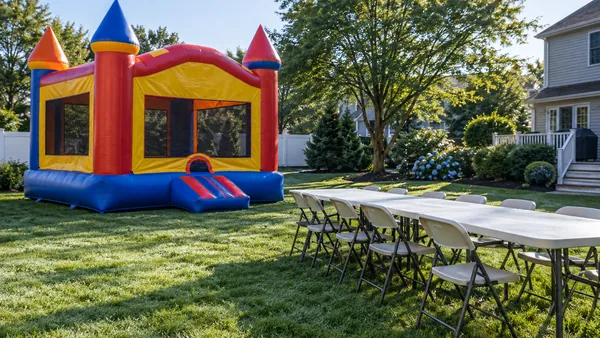
Battleground Party Rentals lists a handful of packages with prices attached. Two of them, a $165 “Backyard 40” and a $95 “Backyard 20,” were selected on 13 of the 28 quote forms submitted between June 16 and September 12, 2026. That is 46 percent of every lead the site produced, concentrated in two line items with a dollar sign on them. Another 8 requests were for chairs only, which is also a priced item. The remaining 7 were custom or unsure.
Read that the way a homeowner reads it. They landed on the page, saw a package that matched what they needed, saw a number they could afford, and filled out the form. No phone call to get a quote, no waiting for a callback, no comparison shopping with three other companies. The price closed the gap between interest and action.
What does a published price do for AI search?
This is the part most contractors have not caught up to. When someone asks ChatGPT or Perplexity “how much does it cost to rent tables and chairs for a backyard party in Freehold,” the engine looks for a page that answers with a number. A page that says “call for a quote” has nothing to cite. A page that says “$165 for the Backyard 40 package” gets quoted, with your business name attached. Specific pricing is one of the most-cited content types in AI answers, because it is exactly what the question asked for.
Hiding your prices, in 2026, means hiding from the customer and from the assistant the customer asked.
How do you publish prices without getting burned?
Use ranges where the job varies: “gutter cleaning from $150, most homes $150 to $300.” Publish package prices for the things that do not vary. State what is included and what triggers the higher end. Update the page when your prices change, which a managed site does for you. The contractor who publishes a range is not locked to a number; they are pre-qualifying the lead so the call that follows is a real one.
As for competitors: they already know roughly what you charge. Your customers are the only ones who do not, and they are the ones who leave when they cannot find out.
Questions people ask
Will publishing prices lock me into a number?
Not if you publish ranges and state what moves the price. A range pre-qualifies the lead; it does not replace the estimate.
Do AI search engines really prefer pages with prices?
Yes. Pages that answer a pricing question with a specific number are cited far more often than pages that say call for a quote, because the number is what was asked for.
What if my prices change seasonally?
Update the page. A managed site handles that as part of the monthly work; a set-and-forget site is where stale prices become a problem.