
The three-piece stack that fixes this
You don’t need a sales team. You don’t need a CRM your guys won’t use. You need three pieces working together.
1. A website that captures the visitor
The site has to do three things on every page: surface a phone number, surface a quick-contact form, and load fast enough that the visitor doesn’t bounce before either appears. That’s the whole job. Most contractor sites fail this because they’re desktop-first, slow on phones, and bury the contact info two scrolls down.
Atlas Genesis handles this layer. Sticky click-to-call, sub-2-second mobile load, contact forms with mobile-friendly field inputs, real-review widgets near the CTA. Built for the 80% of contractor traffic that’s already on a phone.
2. An AI receptionist that answers every call
Calls that come in: whether the visitor clicks-to-call, dials your Google Business Profile number, or saves your number for later, get answered. By a real-sounding voice that knows your services, your service area, and your scheduling rules.
The AI receptionist:
- Picks up every call, including the 95% that ring after-hours
- Qualifies the caller (what trade, what town, what timeline, what budget if appropriate)
- Books a time slot directly into your calendar if you let it
- Sends you a text summary of every call within seconds
- Hands off complex calls to you or your scheduler if needed
Atlas Orion handles this layer. The receptionist is trained on your business specifically: your services, your towns, your hours, your tone. It doesn’t sound like a chatbot. Mike Gould’s callers don’t realize they’re talking to an AI until he tells them.
3. A response loop that closes the gap
The third piece is the close. The AI captured the lead. Now what?
For most Atlas clients, the loop looks like this: Orion sends Mike a text within 30 seconds of the call ending: "New job request: John from Edison NJ, commercial fire alarm install for a 12,000 sqft warehouse, wants quote within a week. Calendar slot booked for Tuesday 2pm site visit. Caller’s phone: 732-555-0123. Notes: existing system is 18 years old, recent inspection failure."
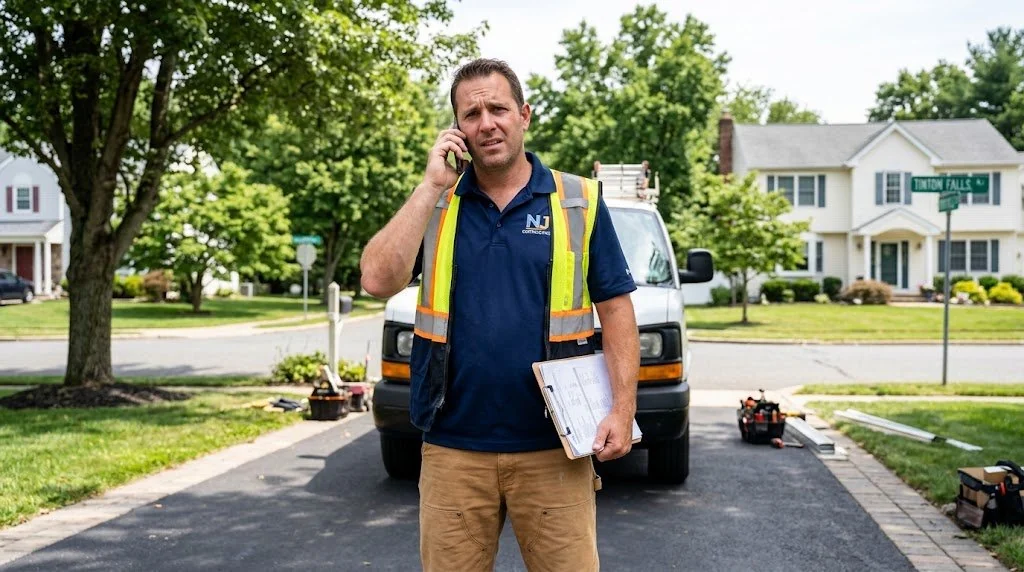
Mike sees the text. He has the choice: confirm the slot, reschedule, or call back personally if it’s a high-value lead he wants to handle himself. The lead is already qualified, captured, and either booked or queued for human follow-up. The work he does on it is high-leverage, not phone-tag.
Why this matters more for solo and small operators
The bigger you are, the more this is just operational efficiency. The smaller you are, the more it’s the difference between staying small and growing.
A solo contractor with no admin help can’t answer the phone while running a saw. A two-truck shop can’t hire a $4,500/mo receptionist without giving up most of their margin. But every missed call is a closed door. The lead-capture stack closes that gap without payroll.
Specifically:
- Cost: $99–$299/mo total for the stack vs $4,000–$5,500/mo for a human admin
- Coverage: 24/7/365 vs 9-5 weekdays
- Quality: Consistent qualification and follow-up vs whatever your admin remembers to do that week
- Scalability: Handles 1 call or 100 calls/day with no extra cost

What the stack actually replaces
For a typical residential contractor, the lead-capture stack replaces:
- A $1,200/mo answering service that takes messages but doesn’t qualify or book
- The 4–6 hour daily window the contractor spends returning missed calls
- The 30–50% of leads lost to phone tag
- The need to hire a part-time admin for $25–$30K/year just to handle phone overflow
Net effect: lower fixed cost, higher lead capture rate, more time spent on actual jobs.
The short version
Most contractor lead loss isn’t from bad leads. It’s from being unreachable when the lead calls. The 24/7 lead-capture stack: mobile-first website, AI receptionist, structured response loop, closes that gap without hiring a human admin.
Mike Gould recovered ~25 calls in his first month. At his average ticket size, that pays for the entire Atlas stack for the year. Atlas Orion answers your phones today, even the after-hours ones. Atlas Genesis makes sure the website doesn’t bounce the visitor before they pick up the phone in the first place.